

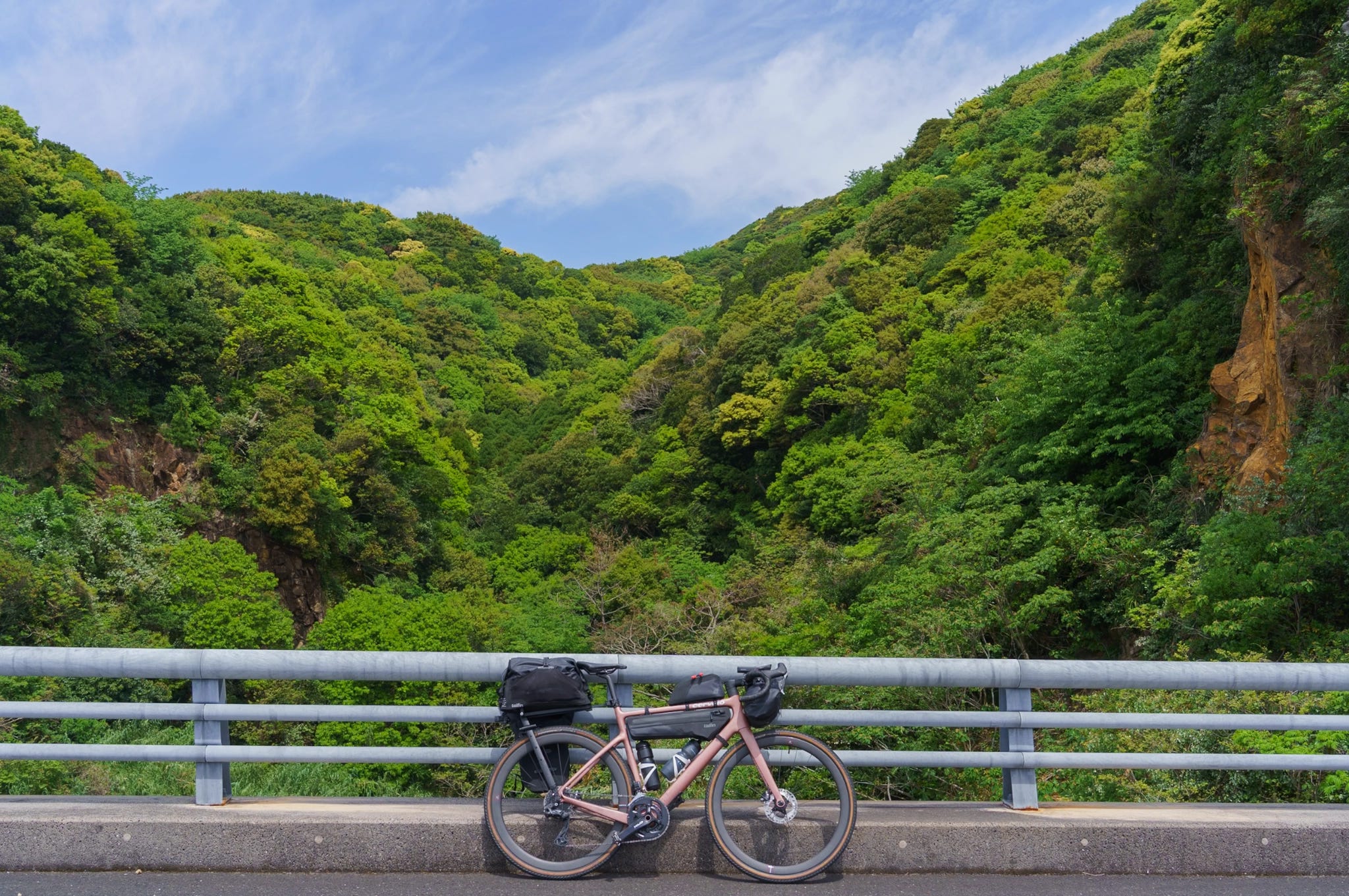
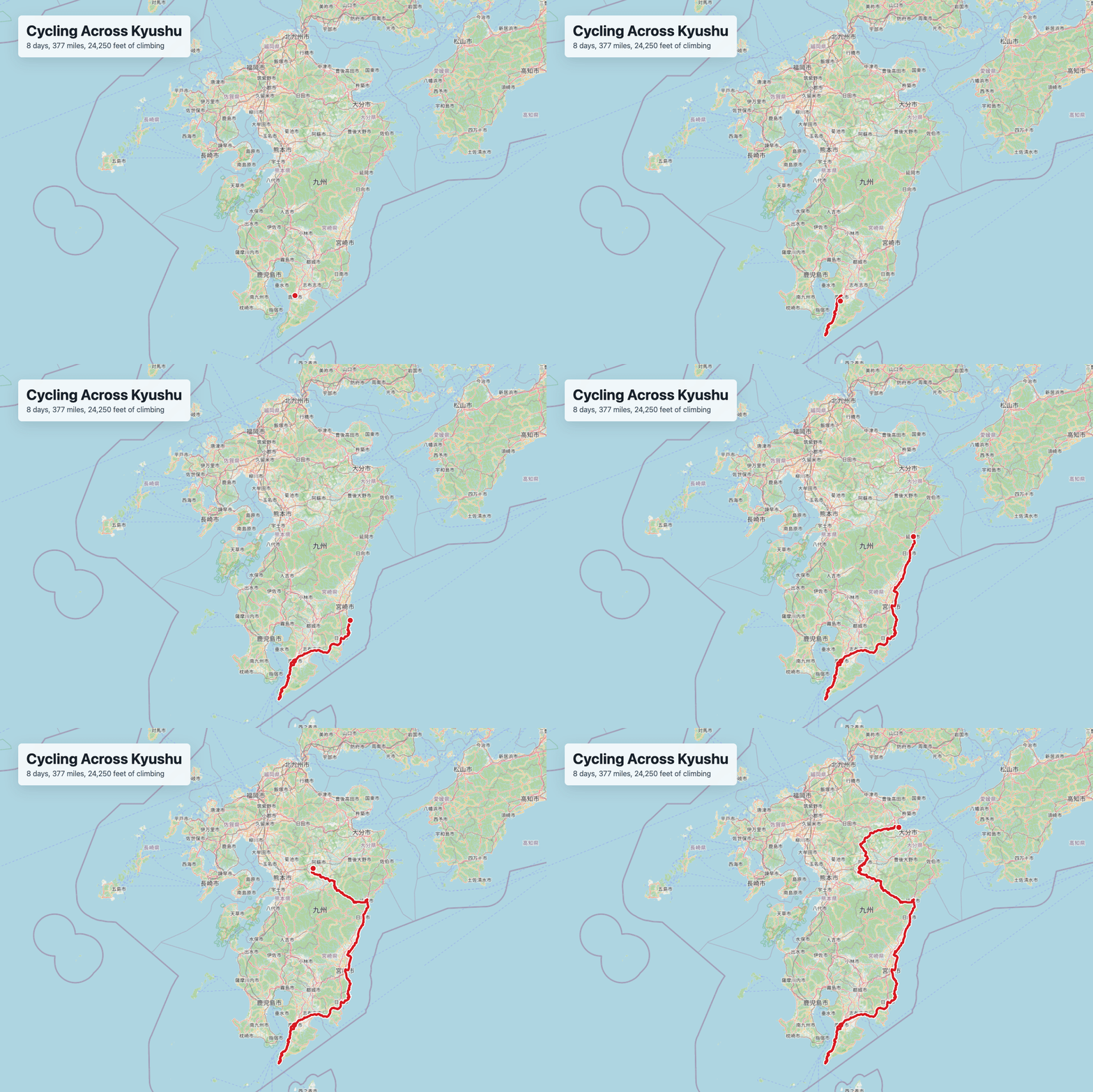
I’m writing this from Osaka, where I’m taking a six day break off the bike to rest and recover before continuing north across Japan. I crossed the island of Kyushu back in mid-April, finishing the first of Japan’s four main islands in eight days of riding and a handful of rest days. At 380 miles and nearly 25,000 feet of climbing, it was a proper cycling trip by any reasonable measure.
I’ve been avoiding the temptation to write this as a day-by-day trip report. Instead, this is a dispatch from the first island, i.e. a handful of scenes and impressions that stayed with me as I kept moving north.
Route design notes are in an earlier post, and GPX recordings are here for anyone who wants the data.
Beginnings
The first sense of this trip’s beginning came the night before I left Tokyo, in a hotel room across from Shinagawa Station. After nearly two weeks spent enjoying the culinary and cultural comforts of the city, I spent the evening reassembling my bike and sorting my belongings into two piles: the things that would come with me, and the much larger pile that would not. At 9pm, a truck pulled into the hotel parking lot to collect all of those things that could not fit onto my bike. I handed over two suitcases full of clothes, toiletries, electronics, and other small comforts, then returned to my room which looked suspiciously tidy after the chaos of the last few hours. Against the far wall leaned my bike, its few bags entirely overstuffed despite the minimalism of my packing list. For the first time since dreaming it up so many months prior, the trip felt less like an idea and more like a physical fact. Ten weeks of movement, reduced to this one bike and what I could carry on it.
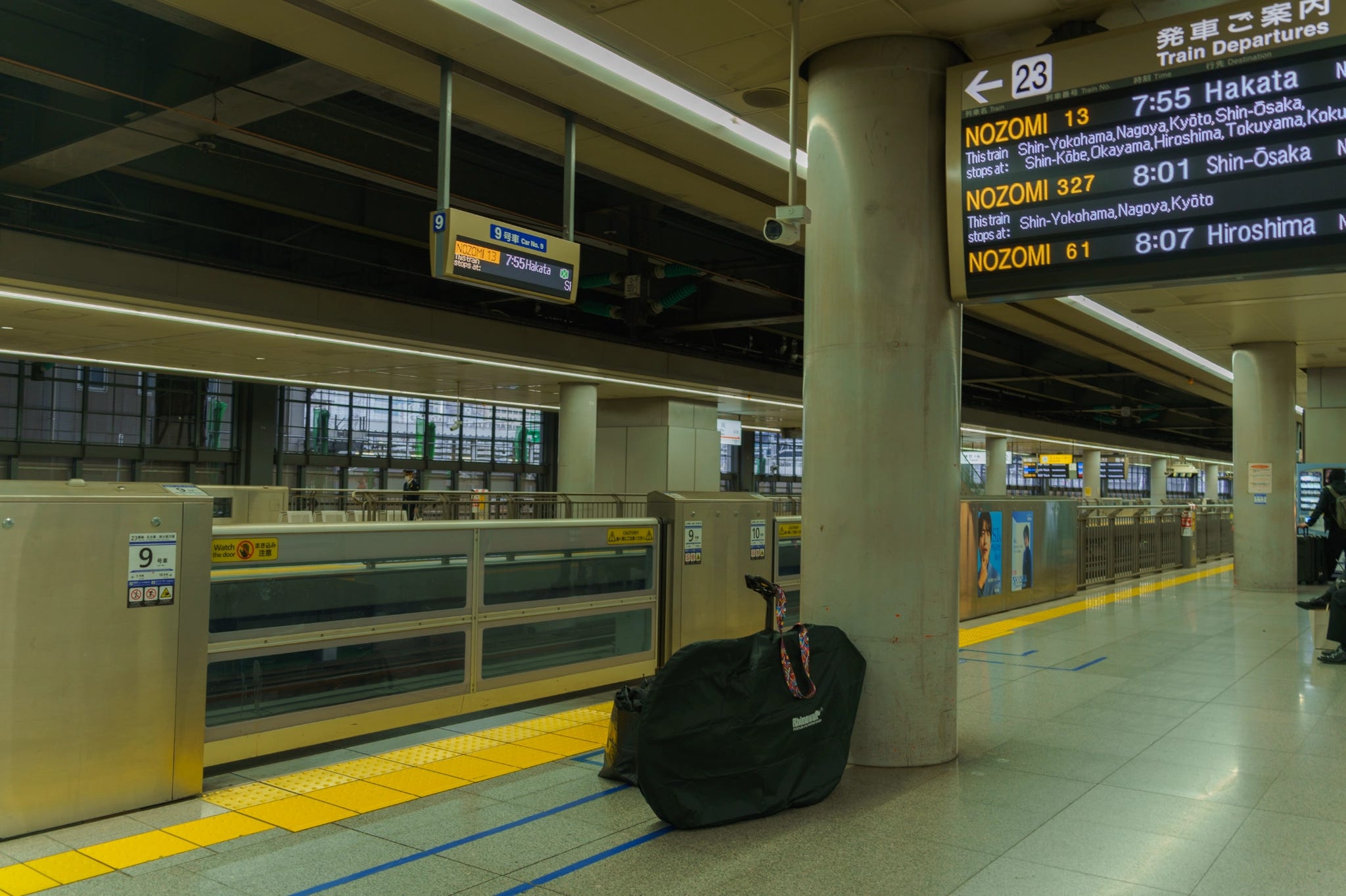
The next morning, after awkwardly wrestling 50 pounds of gear through the rush-hour train station, I boarded a Shinkansen bound for Kagoshima, the southernmost major city in Japan and the closest I could get by train to the start of my route. I settled into my reserved seat with a breakfast onigiri and canned coffee while the train cut through a country dense with rain. For six hours we moved at nearly 300 km/h, close enough to the ground to see fields, factories, towns, coastlines, and mountains, but fast enough that Japan slid by in an almost abstract manner. I had stared for months at the route as a set of colored lines on a digital map and knew the numbers by heart: 3,700 kilometers, four main islands, 49 planned days of cycling. From the train window, the scale finally became intuitive. This was the landscape I would have to earn back, slowly, under my own power, from the exposed saddle of my bike.
Six hours and 2,000 kilometers later, I left the Shinkansen station in Kagoshima and boarded a ferry across the bay toward the peninsula that holds Cape Sata, the southern tip of Japan’s main islands. After securing my bike among transport trucks and rental cars in the hold of the ship I ascended to the passenger deck, where the dark of the hold gave way to sunset. Tropical air greeted my face and the ferry rumbled beneath my feet as it pushed through the water of the bay. Kagoshima receded into the distance behind me while Sakurajima sent a plume of volcanic smoke blending into a cloudy sky off to my left. To my right, a line of volcanic silhouettes faded into the southward distance, the direction I would cycle into the next day. For a moment, the anxiety of logistics fell away: the train transfers, the weather checks, the bike assembly, the nervous first miles on the left side of the road. I was alone on a ferry at the southern end of Japan, the only person in sight dressed entirely in spandex, watching the terrain I had spent so much time tracing on maps rise out of the bay in front of me.
Eating Kyushu
A handful of interactions with locals during my first few days in Kyushu taught me that “Japanese food” was too broad a category to have much relevance on this trip. People would ask where I was riding next, then tailor recommendations to the route with surprising precision. Miyazaki had its beef and chicken. Kumamoto had its horse. Oita had its own specialties. Ryokan meals came with ingredients I never would have ordered on my own. These recommendations were delivered with the seriousness of people trying to ensure I did not pass through their part of Japan incorrectly.
By my fourth day of cycling, I had ridden roughly 200 miles through southern Kyushu and arrived in the city of Miyazaki exhausted, sun-soaked, and badly in need of protein. A quick search turned up a highly-rated yakiniku restaurant near my hotel. Locally raised meat, grilled at the table, with rice, kimchi, dipping sauces, and the possibility of ordering until my legs stopped complaining.
It sounded perfect, but truthfully, I was intimidated. My Japanese consisted of maybe twenty memorized phrases, five of which were apologies, and English speakers are rare on this side of the island. A high-interaction dining format like yakiniku seemed like the type of place where I was destined to make an ass of myself. I briefly considered giving up and heading to the local ticket-machine rice-bowl chain, but there is an optimal number of times to risk making an ass of yourself while traveling, and that number is not zero. One of these dinners had to be my first yakiniku night. It might as well be tonight.
I walked in, and surprisingly enough, the restaurant was empty. I held up one finger and bowed to signal my intention to occupy a grill by myself, then was pointed to a spot at the counter. Google Translate over a photo of the menu led me to a trio of locally raised meats: marbled short rib, pork belly, and chicken thigh. I struggled through an order for the combo, a side of rice and kimchi, and a non-alcoholic beer. The owner lit my grill, rubbed it with tallow, and a few minutes later placed a platter of raw meat in front of me.
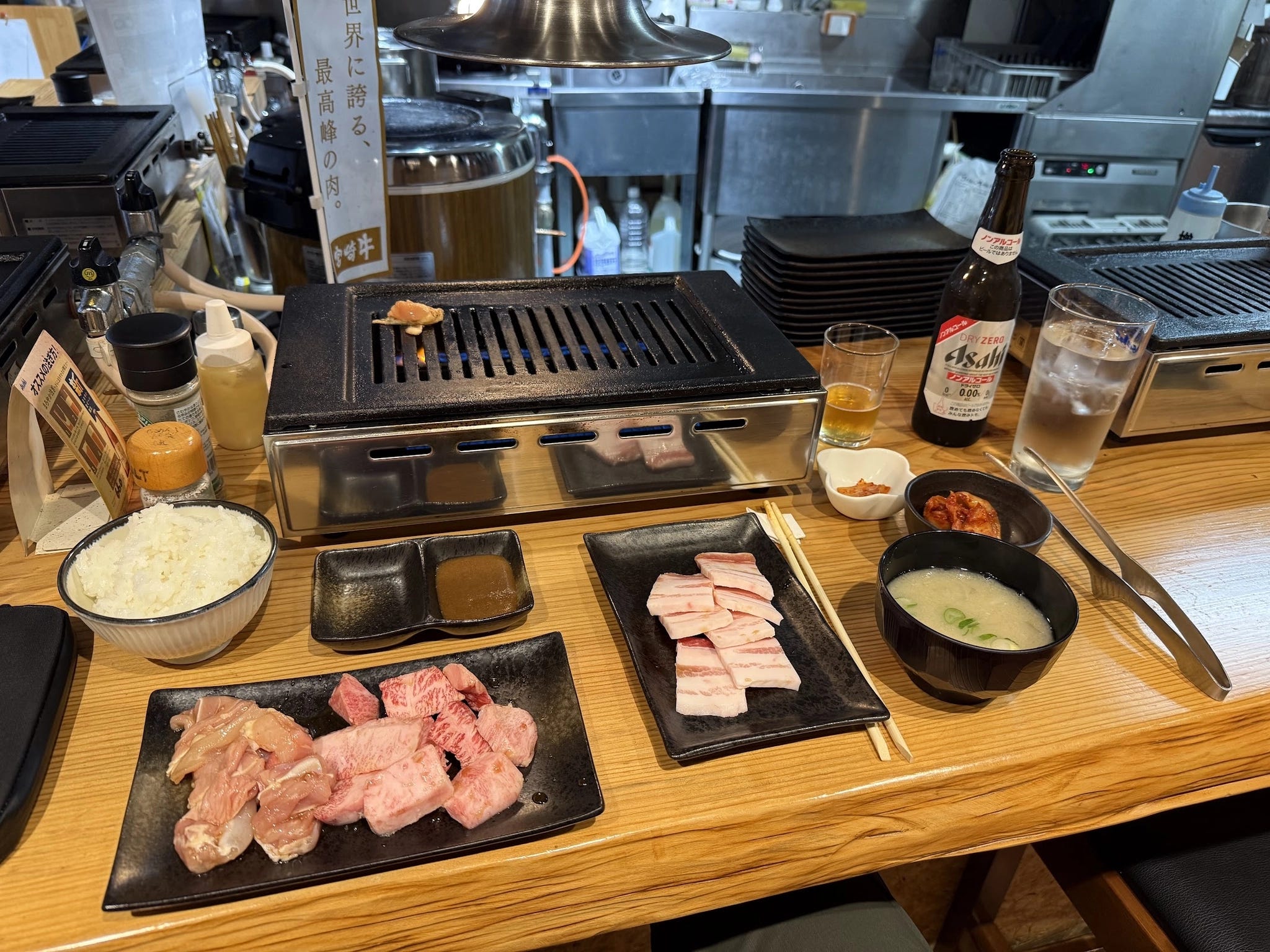
I took a slice of the most marbled beef I’d ever seen in person and laid it delicately atop the grill, flipping it after a few seconds and erring on the side of rare since it would certainly be a crime to overcook meat of this quality. I gave it a quick dip in the house sauce, placed it on my tongue, and it melted. My body registered the abundance of calories, fat, salt, and protein and shivered in response. Two chews and the slice had dissolved. I genuinely did not know beef could be this good.
The next few hours followed the same pattern: grill meat, dip in sauce, alternate with rice and kimchi, wash it down, ask for the next recommendation, repeat. By 8 pm I was sweating from some combination of the charcoal grill’s heat and my body’s struggle to process the amount of protein I was ingesting. At some point, the owner became curious about what could possibly have worked up this kind of appetite, and I explained my trip: Kagoshima to Wakkanai, by bicycle. Other diners overheard, asked questions, laughed, and seemed delighted by the absurdity of it.
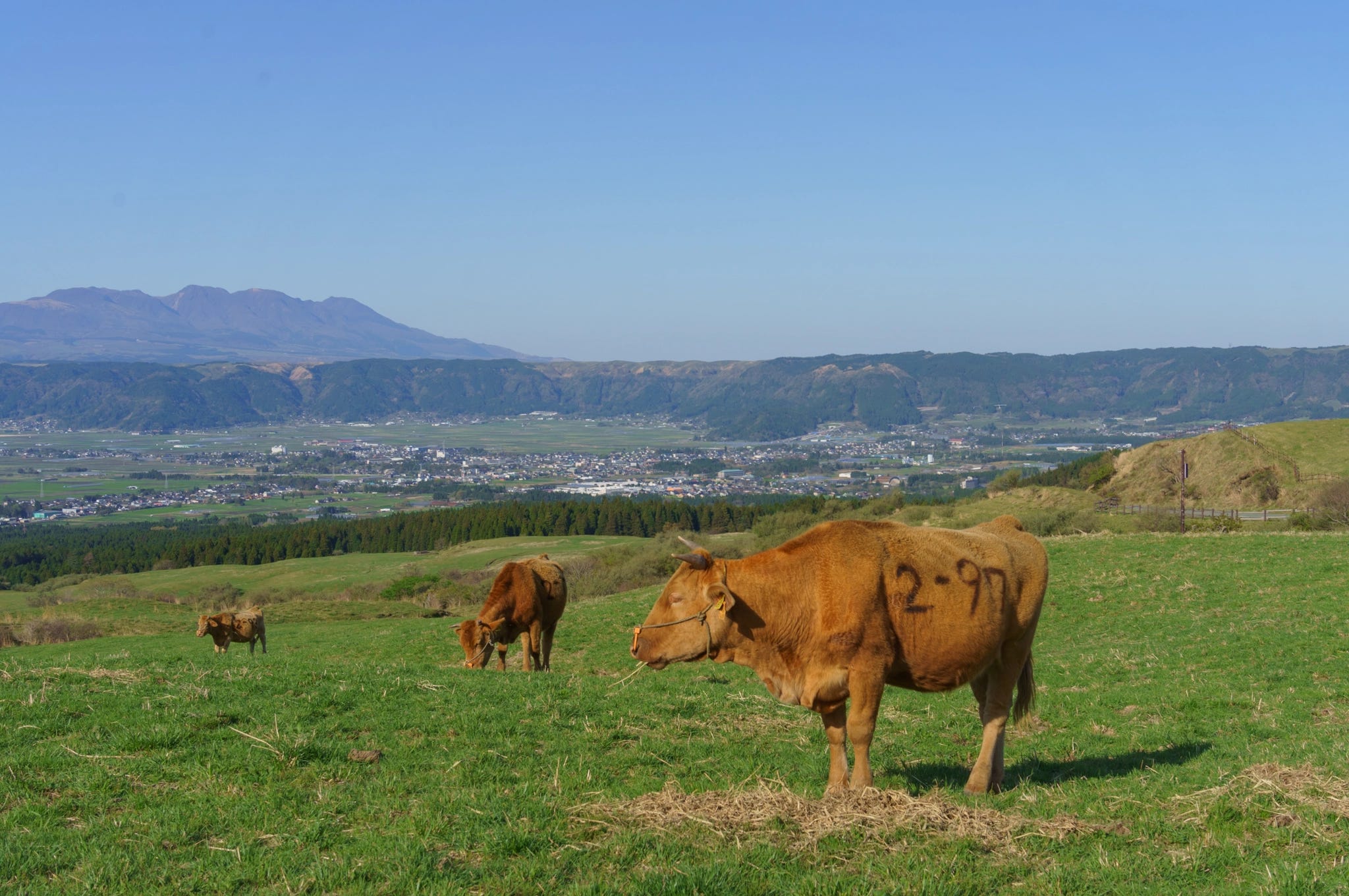
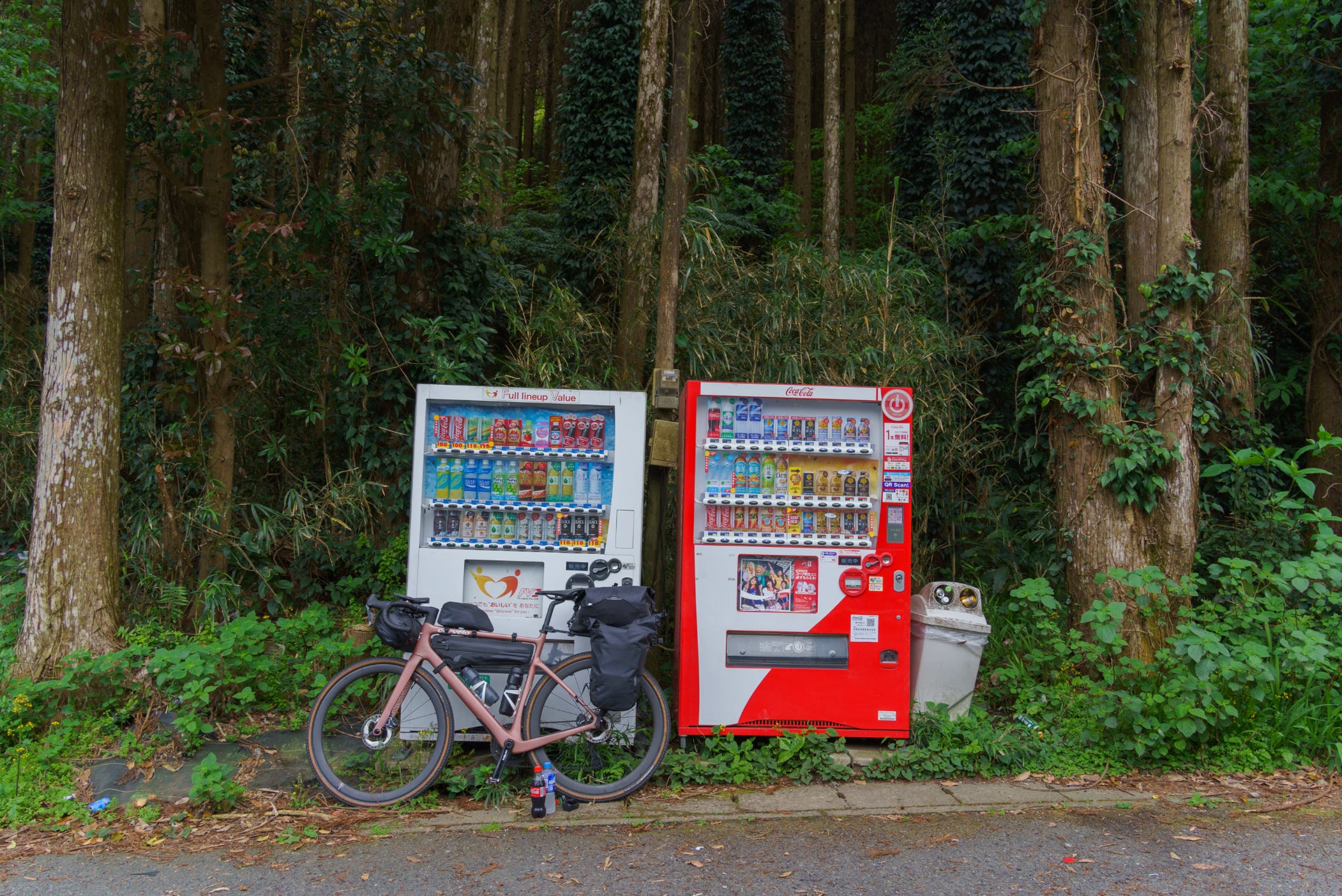
That night kicked off a string of culinary encounters across Kyushu: a heaping plate of chicken nanban in Takachiho Gorge, blackened charcoal chicken cooked in front of me in the Aso Caldera, a ryokan attendant in Oguni gently convincing me to try basashi while failing to overcome my deeply American suspicion of raw chicken. Beneath all of it was the daily rhythm of konbini calories: canned coffee, croquettes, onigiri, custard breads, fruit sandwiches, and at least one lunchtime ice cream bar, rain or shine.
Rain
I had spent the weeks leading up to this trip dreading the prospect of cycling Kyushu in real rain. In five years of cycling, I had never ridden in anything heavier than a drizzle, which is the kind of statement only a Californian can make with a straight face.
The weather broke in my favor for the first few days, but on the fourth morning I woke to dark skies and the sound of heavy rain against my hotel window. An updated forecast confirmed my suspicion: the day’s 65-mile itinerary up the Miyazaki coastline would be done in a downpour. I pulled on my never-before-used rain gear, triple-checked the seals on my cycling bags, and set off north. Within 15 minutes I was soaked: splash from puddles kicked up by passing vehicles, spray from my own wheels, rain running off my helmet and jacket and onto my absorbent bib shorts. Within 30 minutes I was wet in places I had not expected to be wet: inside my gloves, inside my cycling shoes, underneath my rain jacket.
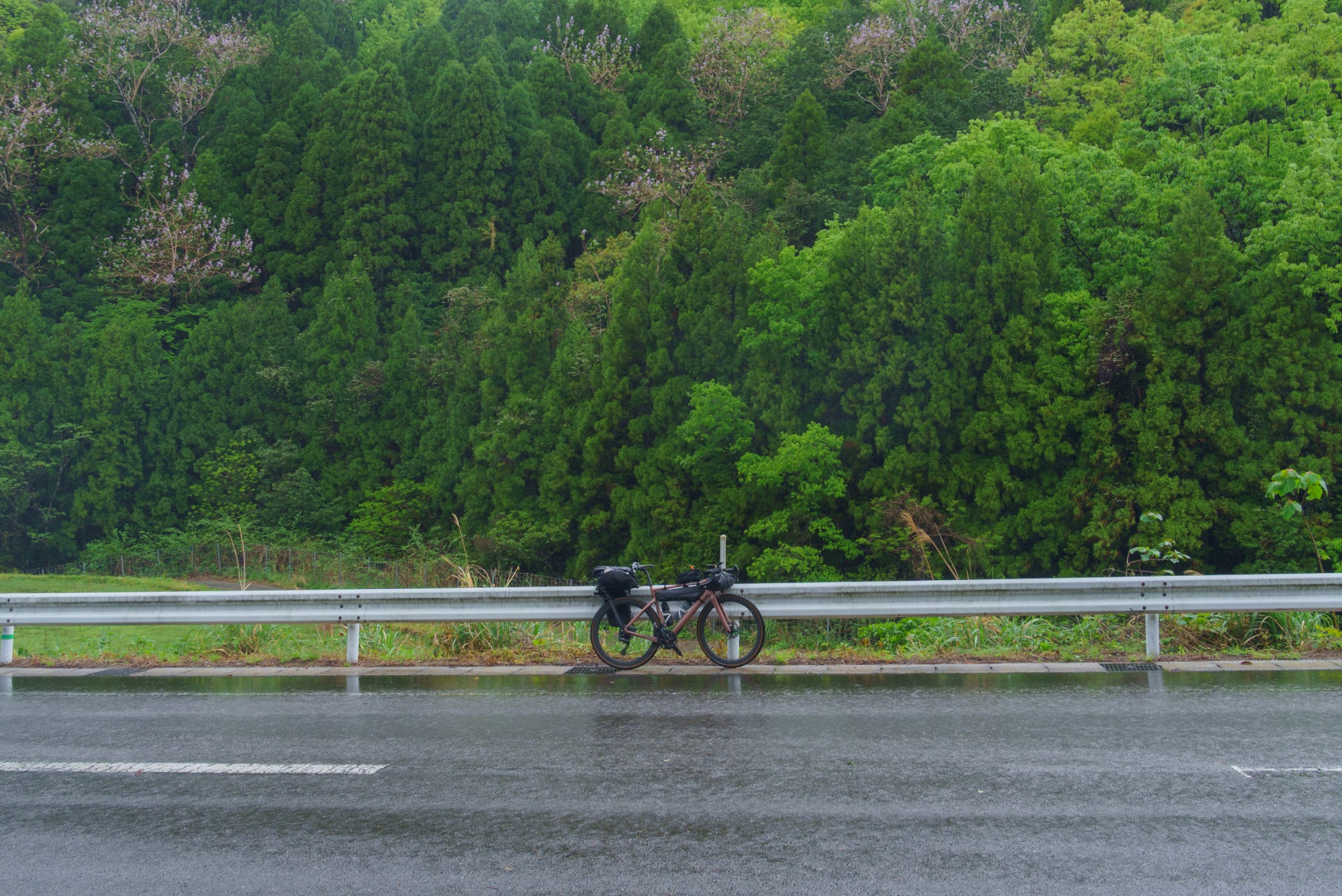
I stood there on the side of the highway, soaked to my core, less than 10% done with the day’s mileage and moving at half my normal pace, and started laughing. What was I even doing here, in a corner of Japan so remote they don’t even run train lines to it, hugging the gutter of a flooding highway in failing rain gear? I’m on sabbatical and could be anywhere on earth, and I’m here, doing this?
With the tension momentarily broken, the situation became easier to assess. I was soaked, but not cold. I was moving slowly, but still moving. The road demanded more attention, but it was rideable. The terms of the day became simple: slow down, ride defensively, keep the bike upright, and make steady progress north.
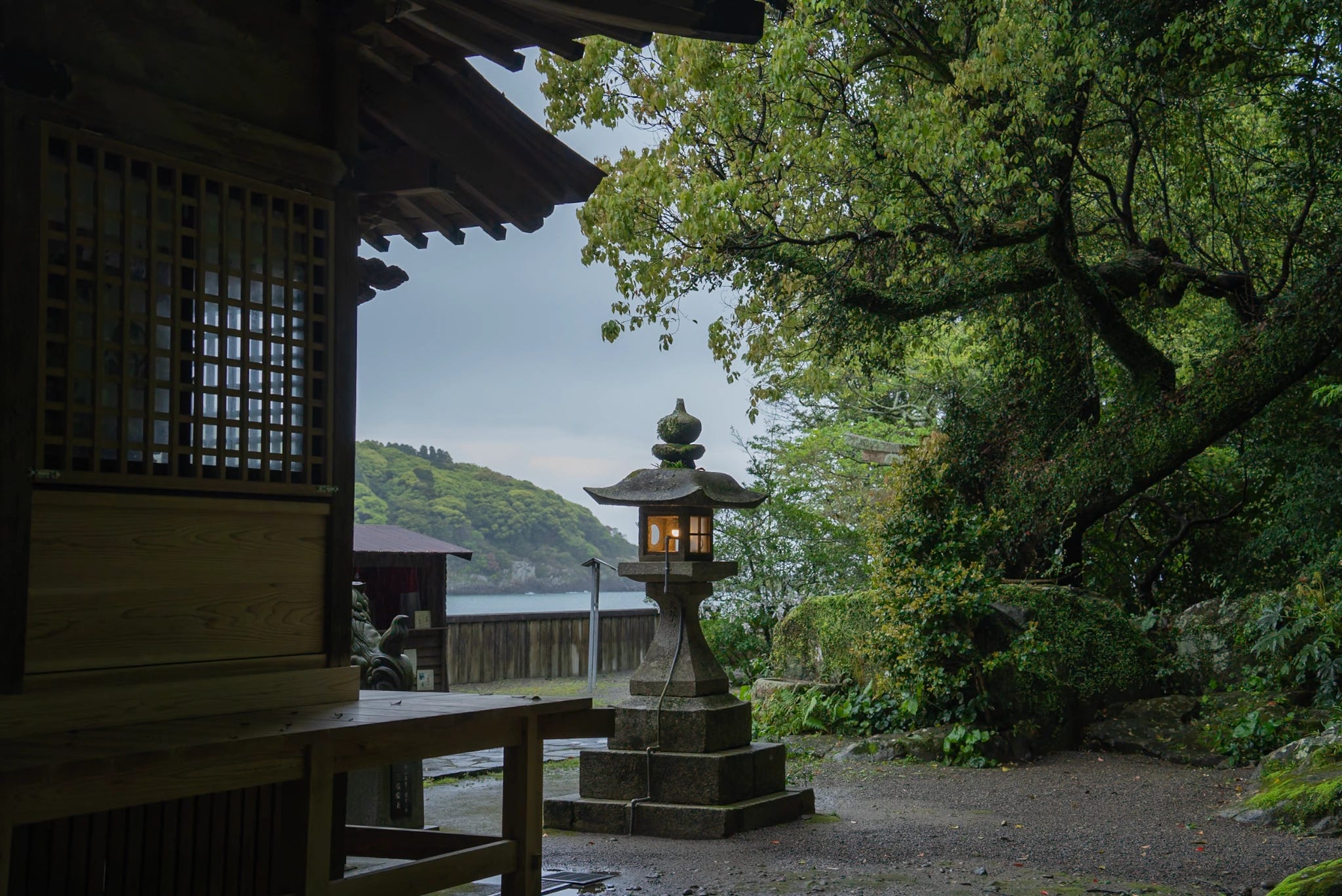
As my mood turned for the better, I began noticing how Kyushu changes in the rain. The foliage deepens in color, mist settles in the valleys, runoff gathers into waterfalls high on the coastal cliffs, reflections scatter as droplets break up the surface of flooded rice paddies. Shrines and temples take on a different feeling: darker stone, brighter moss, wet steps, fewer people, the whole place quieter and older-feeling than it had been under clear skies. I was still soaked, still moving far slower than planned, and still listening nervously to the grit in my drivetrain, but I was beginning to appreciate this different side of the island rather than solely focusing on surviving the day.
By the time I reached my hotel, my shoes were full of water and every piece of clothing I had on needed to be wrung out over the bathtub. Nothing about riding in the rain had become fun, exactly. But it was no longer a disaster waiting to happen. It was just weather.
Tempo
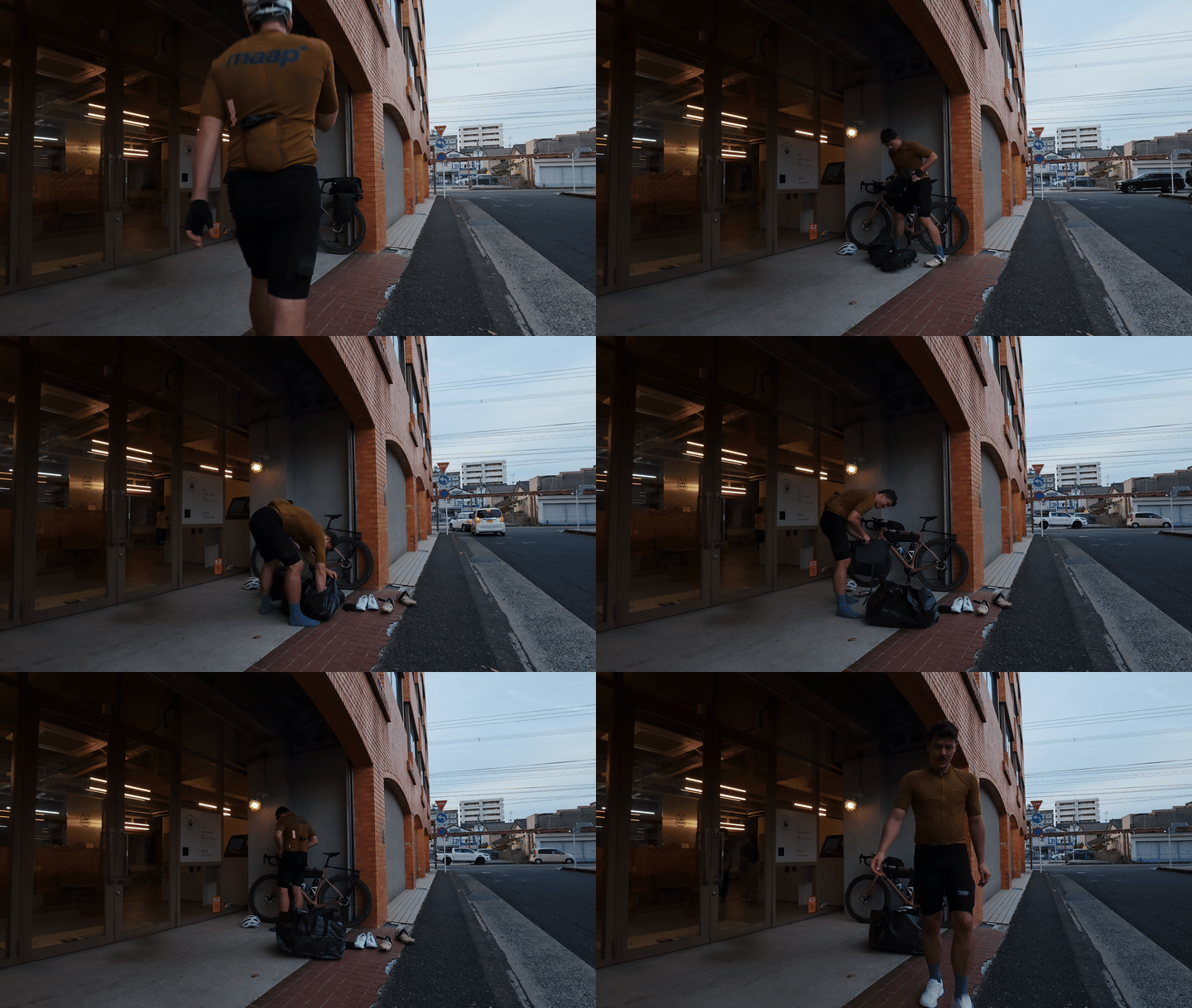
In the imagined version of this trip, the day ends soon after reaching the lobby of my hotel for the night. Check in, shower, eat dinner, sleep. In practice, arriving is the start of a second shift. First I have to find out where the bike is allowed to sleep. Then I partially disassemble my rig in the parking lot, pull the bags off the bike, unfold my packable duffels, and convert the whole contraption from “vehicle” into “luggage.” Only then do I walk into the hotel, trying to look less like a spandex-laden swamp creature than I actually am.
Once inside the room, the hotel becomes a tiny operations center. Wet clothes need to be washed or hung somewhere they might plausibly dry by morning. Electronics need to be triaged according to the limited number of outlets, cables, and adapters I have on hand: phone, bike computer, lights, cameras, headphones, laptop, battery banks. Footage has to come off SD cards, onto hard drives, and sometimes into the cloud, assuming the hotel WiFi is feeling generous. Loved ones need updates. Strava needs an upload. Dinner still has to be found. And under all of this is the quiet knowledge that tomorrow is not fully planned just because a route exists on my cycling computer.
That was probably the biggest logistical surprise of the trip. I had spent months designing all 49 cycling days in advance, but none of those routes could simply be pulled off the shelf and ridden without adjustment. Weather changes, hotels sell out, ferries run on specific schedules. A route that looked sensible on a laptop sometimes needed adjustment once I knew more about the traffic, tunnels, climbs, food gaps, or advice from locals. Some nights this meant a quick check and an early bedtime. Other nights it meant an hour of comparing translated hotel pages, scanning road reports, checking cancellation windows, and deciding whether to push farther tomorrow because a storm was coming the day after.
Morning weather check, ride, arrive, unpack, wash, charge, eat, route-adjustments, final weather check, sleep. Every few days, book the next block of hotels. Every week, zoom out and audit the next few hundred miles. The climbs, the hot springs, the meals, the beautiful stretches of coast road — all of them depend on this machinery working in the background.
Departing the Coast
When planning my route through Kyushu, the most significant design choice was whether to keep following the eastern coastline north or turn inland through the mountainous interior. The tradeoff was simple: the coast would be flatter, faster, and more predictable; the interior would mean more climbing, more weather exposure, and more uncertainty, but it would also take me through many of Kyushu’s most dramatic landscapes.
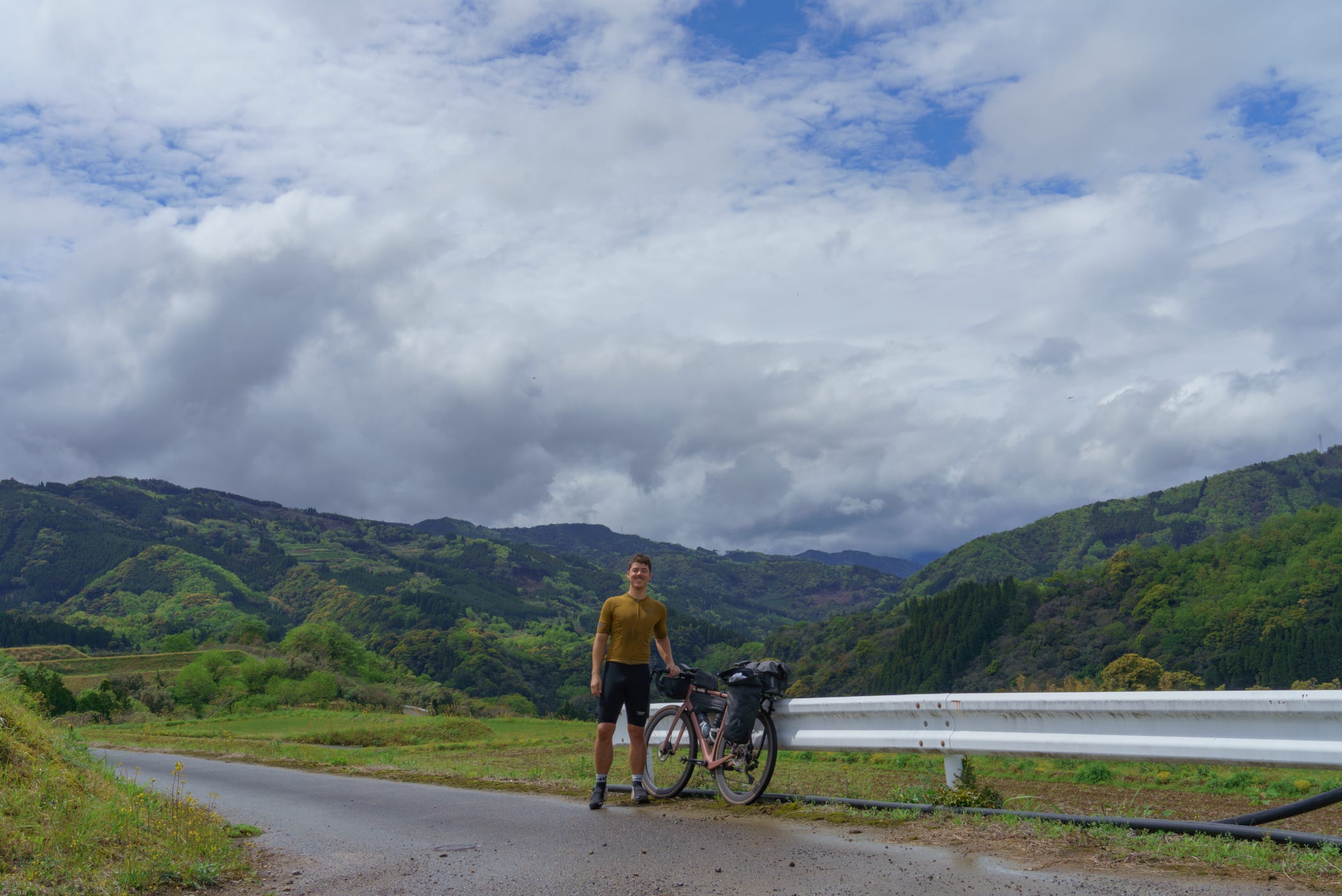
After five days of coastal riding, I woke in Nobeoka and turned west, putting the ocean behind me and a wall of wet green mountains ahead. The road steepened almost immediately. The broad coastal plains gave way to gorges and suspension bridges, and the occasional coastal tunnel gave way to kilometer-long behemoths slicing through ridge lines. After several days of rain, the mountains seemed to be draining from every surface: water running down cliffs, spilling from culverts, and gathering in streams far below the bridges. Road signs warned of sharp turns, monkeys, and boar crossings. The agricultural towns of the coast gave way to sporadic gas stations and konbini stops along the mountain highway.
Takachiho was the first place in Kyushu where I felt the machinery of tourism fully appear around me. After the biggest climbing day of the trip so far, I arrived at my hotel and was greeted in English by an attendant waiting in the parking lot. At check-in I was handed a town tourism packet and met with confused looks when I explained I hadn’t reserved a spot at the traditional folk dance ceremony at the local Shinto shrine that evening. I was assured I could probably still get one of the last spots if I’d just scan the QR code behind the counter before the next wave of tour buses arrived. After days of business hotels, local restaurants, farm roads, and Google Translate interactions, I had entered a place that knew exactly how visitors moved through it.
The next morning I rode down toward Takachiho Gorge at sunrise and found myself tucked between oversized coach buses on the hairpin switchbacks leading to the parking lot. This could have felt deflating, except the gorge is famous for a reason. It is an astonishing piece of geology: a narrow river channel cut through ancient lava flows, with sheer basalt walls rising on both sides, waterfalls spilling from the cliffs, and dense vegetation leaning over the rim. In the early light, reflections from the river moved across the angular basalt columns while bright, toy-like rowboats drifted through the green water below. I walked the paved path along the cliff’s edge and joined the rest of the crowd waiting at the marked overlooks for the same photographs everyone else was taking.
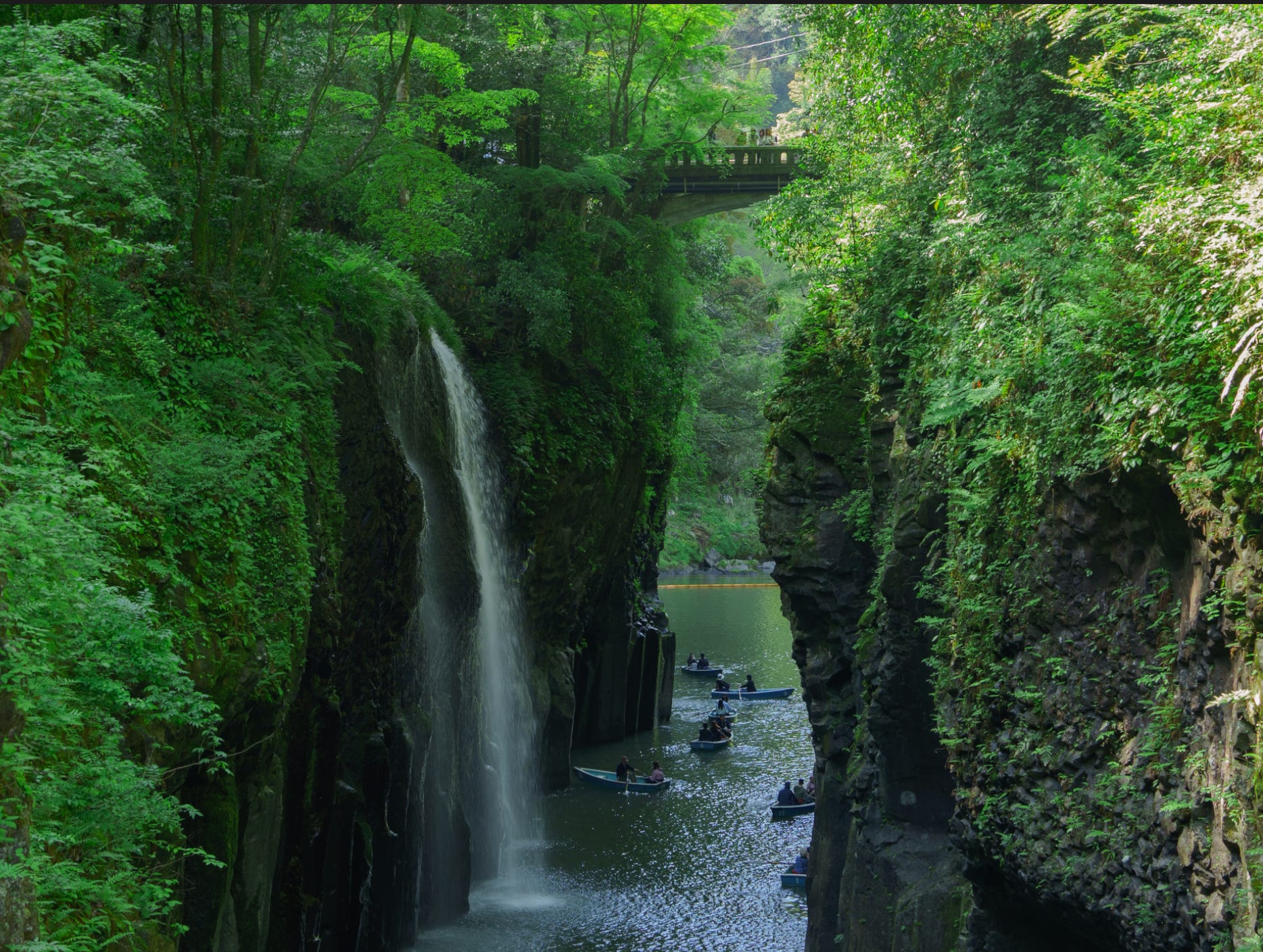
After an hour wandering the gorge, I bought an 8:30am matcha ice cream from the rest stop, packed up my bike, and set my GPS to continue inland. Getting out of town required grinding back up the same switchbacks I had descended that morning, pulling into turnouts every few hundred feet to let buses and rental cars pass.
Hot Springs
One of my core design principles for the route was simple: thread the onsens.
Long-distance cycling prepares the body for a bath with incredible efficiency. Sweat, sunscreen, road grit, chain grease, and the occasional dusting of volcanic ash accumulate until you feel like a grimy shell of a person. Hours hunched over the handlebars tighten the back and shoulders; hours of climbing and headwinds work the same muscle groups until even sitting still comes with a full inventory of aches. At the end of a day like that, the hierarchy of needs becomes very simple: scrub off the road, get warm, sink into hot water, and let the body report back on what still works.
My first real encounter with Kyushu’s hot springs came in Oita prefecture, on the north side of the island. I had booked two nights at a small ryokan tucked high on a forested ridge outside Oguni, and after check-in an attendant led me to my room. At the far end, she slid open the doors to reveal something I had somehow overlooked in the booking description: a private hot spring built into the rocky landscape just outside my room, tucked partly under an awning, shaded by Japanese maples, and fed by a continuous flow of natural spring water from somewhere deep below the ryokan.
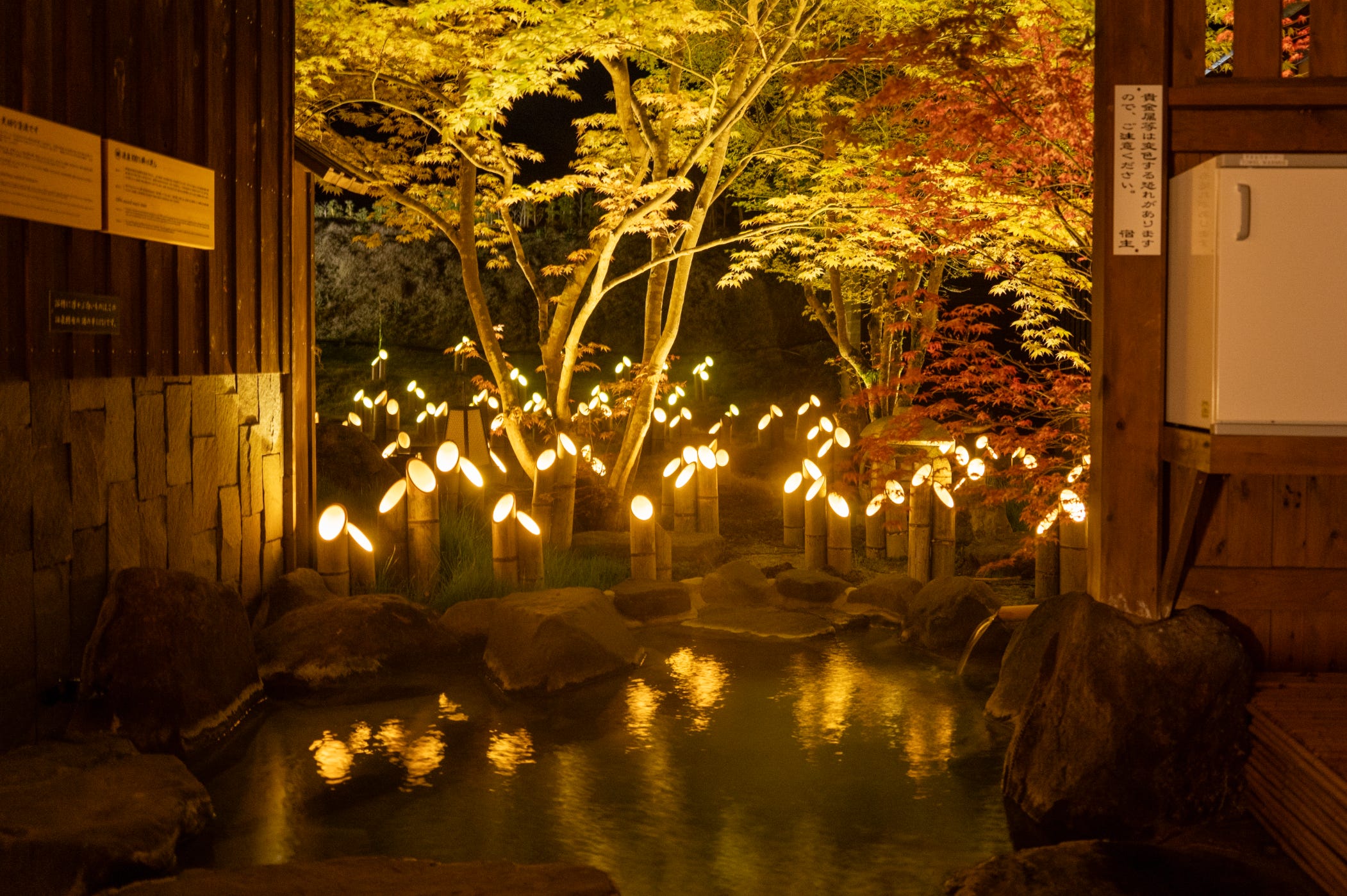
After a thorough scrub in the outdoor shower, I lowered myself into the almost-too-hot water and felt the heat move through my legs, hips, and lower back. Rain pattered just beyond the awning. Fresh spring water burbled continuously into the tub. Frogs called from somewhere in the darkening forest. With my chin just above the surface, I leaned into a deep hamstring stretch and reminded myself to drink enough water to avoid dehydrating while literally submerged in a tub. I stayed there until 3am that first night, reading essays on my Kindle, pruning my fingers, and coming to terms with the uncanny feeling of getting more or less exactly what I had hoped for.
Two days later, I reluctantly left the ryokan and rode north toward the coast. As I moved through Oita prefecture, it seemed as if every storm drain, roadside gutter, and forest creek was venting steam into the atmosphere. Pieces of public infrastructure belched white clouds from pressure-release valves, tapping hot spring sources deep underground and distributing the water to onsens and ryokans in the area. Towns advertised day-use baths with steam-powered wooden water wheels facing the street. Public parks offered spring-fed foot baths to passing tourists. The whole region seemed to be leaking heat.
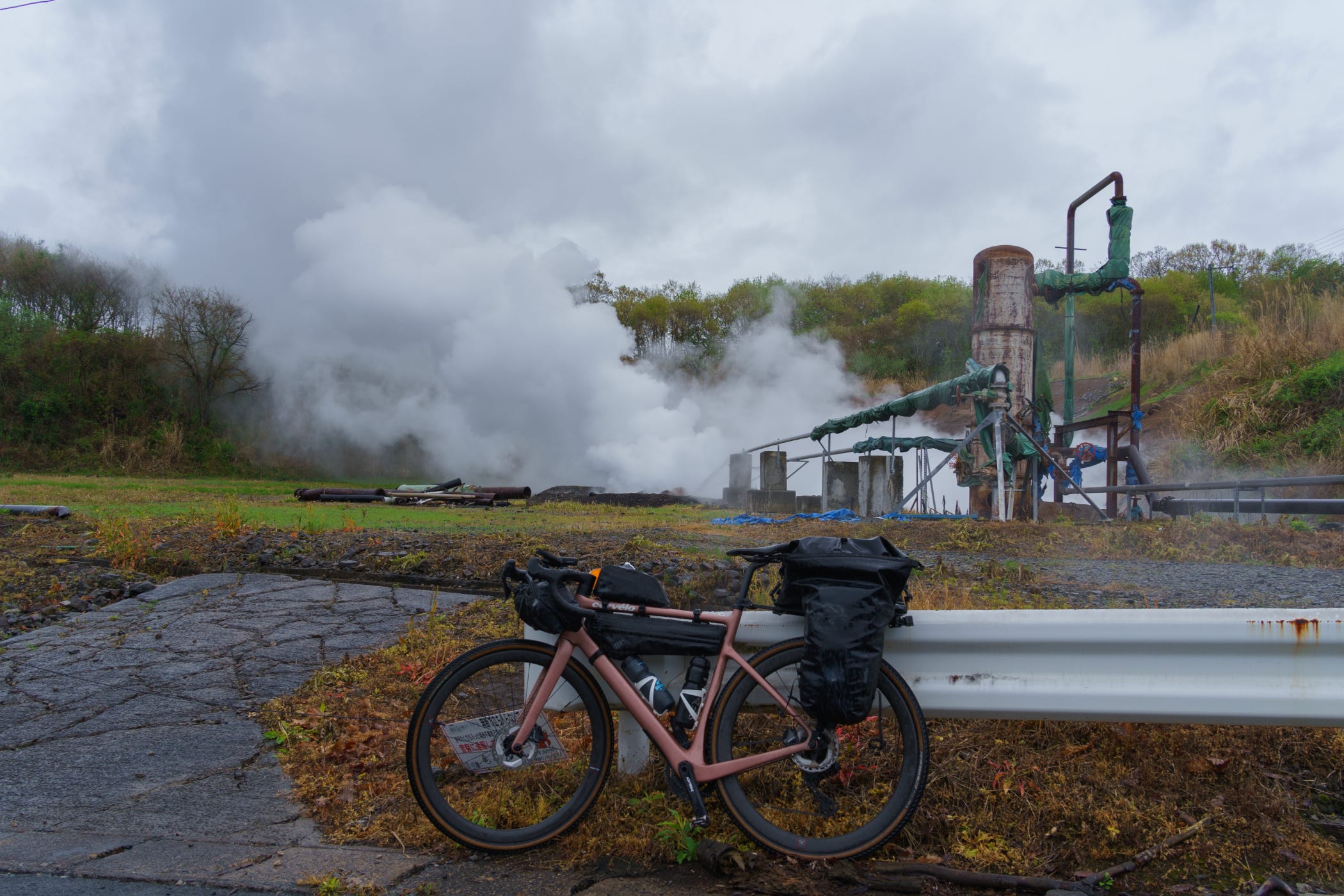
Descending out of the coastal range toward Beppu, the air itself took on a faint sulfur smell, one I had already come to associate with relief. As I dropped below the fog layer, the city spread out across the coast below me, with dozens of steam plumes rising from hotels, bathhouses, vents, and pipes. In Oita, hot springs did not feel separate from the terrain I had been riding through all day. The same volcanic landscape that made Kyushu steep and unstable also produced the water I was using each night to recover from crossing it.
Northward
Writing something like this is interesting because I'm trying to capture aspects of the trip after they've had enough time to form into beats but before the nuances and rough edges have worn away with distance and fading memory. I'm publishing this from Osaka, nearly a month into my journey, and much has changed since leaving Kyushu. I'm more comfortable on the bike, less awkward in my daily interactions with locals, and have settled into the tempo of a ravenous spandex-clad creature whose daily highlight is the look on people's faces when I tell them, in Japanese, where I started and where I'm going.
I'm hoping to get more of these out, but writing is a slow process for me and I'm trying to make sure that processing the trip doesn't end up supplanting the experience of actually living it. That said, the second island of Shikoku was incredible and I'd love to share some thoughts on cycling through its rugged interior. If you're interested in daily updates, you can find little blurbs and photos on Strava, which is the only social media I'm actually updating for this trip.
AI Disclosure — Claude gave some editing feedback and generally reigned in my rambling
Nice story! I agree, take your time and enjoy your adventure. I did 4 months in Europe on a bike, and hand-wrote in a journal every night which in turn re-enforced the memory of what I saw. When I later wrote up a highlight summary, I left out lots of minor details that were important only to me. I look forward to your next summary. Ride safe and well.
Thank you for sharing the journey with us John and definitely take your time to live through the moments and no need to rush writing this (even though I was tempted to text you about it haha).
The onsen-aligned route planning is smart. I had similar experiences for a past ski trip to Japan where I look forward to the onsen (and ramen) at the end of the strenuous activities every single day. It’s the best feeling.
Have fun and look forward to your next post!